Work Order Management
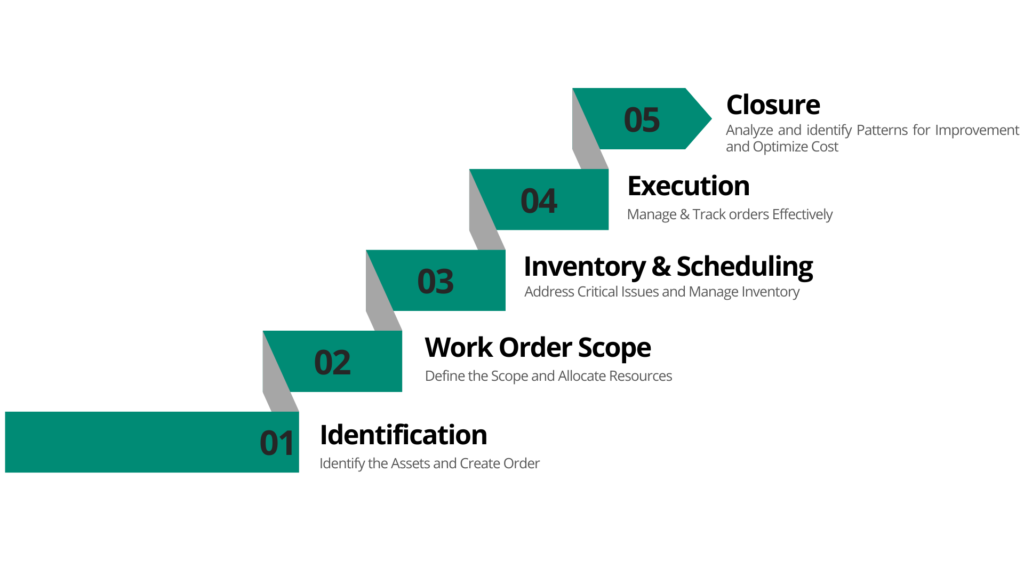
- Work Order Management provides a centralized platform to create, assign, and track work orders it streamlines the entire maintenance process, eliminating manual paperwork and reducing administrative overhead
- Work Order Management systems offer real-time visibility into the status of work orders asset managers and maintenance teams can easily track the progress of work orders, identify bottlenecks, and take proactive measures to resolve issues promptly
- Work Order Management systems allow for prioritizing maintenance tasks based on factors such as asset criticality, safety concerns, compliance requirements, or operational impact this ensures that high-priority work orders receive immediate attention, reducing the risk of asset failures and optimizing resource allocation
- Work Order Management enables effective allocation and utilization of resources, including human resources, spare parts, and equipment
- Work Order Management is an essential component of an asset management system that focuses on efficiently managing and tracking maintenance and repair tasks for assets


- Work Order Management systems maintain a historical record of completed work orders, including details such as maintenance activities performed, parts used, labor hours, and associated costs
- systems help organizations meet regulatory compliance requirements by ensuring that maintenance tasks are performed as scheduled and recorded accurately compliance-related documentation, such as safety inspections, regulatory certifications, or audit reports, can be associated with work orders, making it easier to demonstrate adherence to regulations during inspections or audits
- Streamline maintenance processes, reduced response time, improved task prioritization, and enhanced overall maintenance efficiency
- Easily assign reactive or preventive maintenance work requests to plant technicians
- View every work order from a list or calendar format
- Work Order Management systems provide data analytics capabilities to extract insights from work order data key performance indicators (KPIs) such as mean time to repair (MTTR), maintenance costs, or asset uptime can be monitored and analyzed to identify trends, performance gaps, or opportunities for improvement
- facilitate communication and collaboration among asset managers, maintenance teams, and other stakeholders real-time notifications, updates, and alerts can be sent to relevant personnel, ensuring effective coordination and communication regarding work order status, changes, or escalations
- Filter orders by assigned technician, asset, location, and priority level
- Review trends around work order costs to lower maintenance spend and documentation time spent on a work order
- Understand breakdowns more clearly, and make quicker changes
- Easily assign and prioritize any work order
- Pinpoint cracks & bottlenecks
- Reduce equipment downtime
- Boost the ROI of ‘ASSET/S’