
Asset Information Management
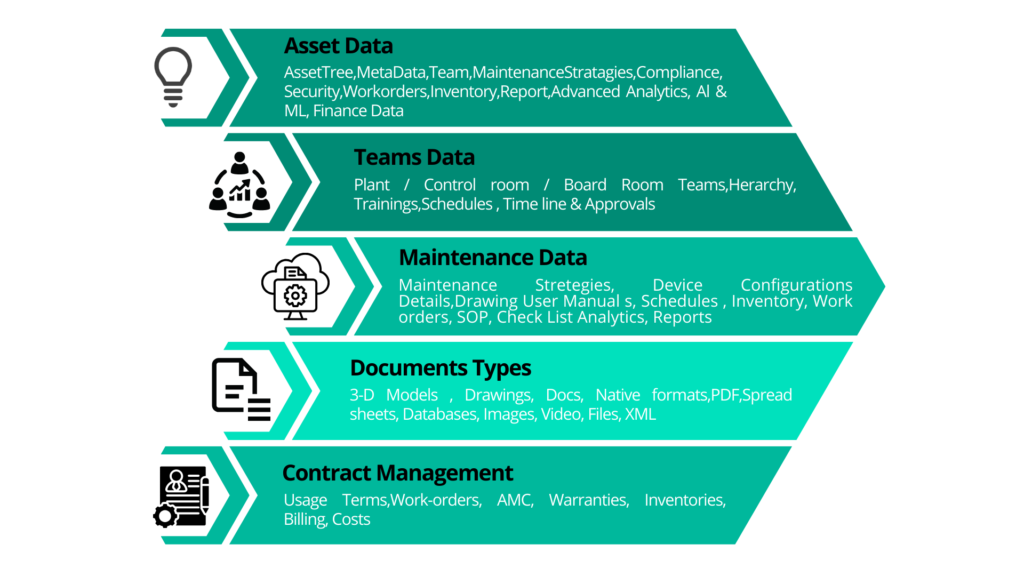
- Connect the siloed information about the assets during the entire lifecycle to empower connected work teams, drive effective decision making and work collaboratively
- Each asset is assigned a unique identifier to differentiate it from other assets this identifier is used to track and manage the asset throughout its lifecycle
- Assets are imagined as a Tree-Structure gather information into any format about each node, organize and interlink to create and manage consistent data models
- Assets can be classified based on various criteria, such as asset type, location, department, function, criticality, and lifecycle stage this classification helps in organizing and categorizing assets for better management and decision-making


- Gain asset performance insights and respond to anomalies with the use of machine learning and powerful analytics
- Share the best practices and hard learned rules across the organization
- Secured web-based access to interact with the network from any location and any device
- AIM systems should have robust security measures in place to protect asset information from unauthorized access, modification, or loss compliance with relevant data privacy regulations and industry standards is essential to ensure the confidentiality and integrity of asset data
- AIM systems provide reporting and analytical capabilities to extract insights from asset data these reports can include asset performance, utilization, costs, compliance, and other key metrics